About Sayantan NandiBuild the capability.
Understand the money.
Choose the life.
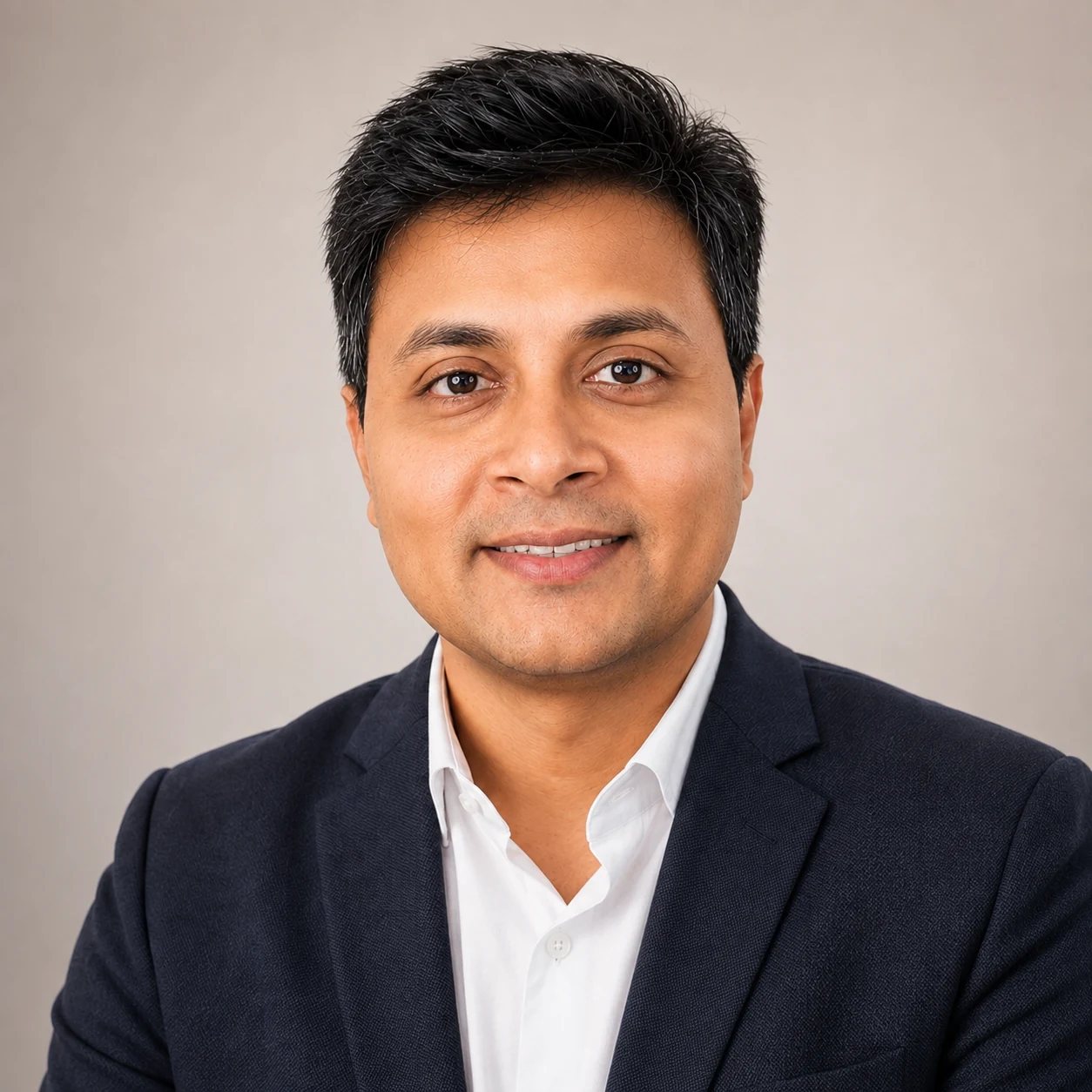
I am Sayantan Nandi, a former IT Director at Schneider Electric and an MBA graduate of the Indian School of Business. Over fifteen years in technology, I led teams of more than 200 people. Today, I teach the skills behind senior and global leadership, and write about what greater earning power can make possible.
My teaching is for managers in GCCs, IT services and multinational companies who want to lead larger portfolios, work across regions and grow their earning power. My wider writing examines how to turn that income into more choice.
15 yearsIn technology
IT DirectorAt Schneider Electric
200+ peopleLed across teams
MBAIndian School of Business
The next role changes what good work means.
A manager can deliver every project and still need to develop the skills of a larger role. A senior leader may have to compare investments, explain commercial consequences and resolve competing demands across regions. Technical knowledge remains useful. The decision now involves more than the technical answer.
Those skills become easier to practice when the assignment is specific. Compare two options. Recommend which commitment should move. Explain the consequence for a customer or another team.
I am interested in the ordinary moments where that transition happens. An update that explains the decision instead of listing the activity. A disagreement that makes an assumption visible. A handover that gives someone the authority to act. These moments can look small beside a major project, yet they influence whether the work can move beyond the person who has always carried it.
The habits underneath them deserve attention too. Working harder can feel safer than changing how you contribute. Saying yes can feel helpful while leaving the cost for someone else to absorb. Knowing the technical answer can make it tempting to skip the business explanation. Those habits have reasons, and replacing them takes practice.
Consider two regional teams asking for the same specialists in the same week. A promise to work harder leaves the conflict unresolved. A useful recommendation names the priority, explains what will move and identifies who can approve the trade-off. That is the kind of work we practice.
The assumptions deserve examination.
Many Indian professionals will recognize a familiar route: do well in school, qualify for a good job and become dependable. That route can create opportunities. It can also leave habits unexamined. Following instructions is different from recommending which instruction should change. Knowing the answer is different from making a decision when the answer is incomplete.
I challenge those habits in my writing. In the course, we examine the situation and practice an alternative. The point is to develop a skill, without turning a familiar response into a judgment about someone’s character.
A good career also needs a purpose outside itself.
My interest in these questions extends beyond a promotion. My family and I moved from Bengaluru to Kochi as we reconsidered the pace and shape of our lives. Savings gave us room to consider a change. The decision still involved the work I wanted to do and the life we wanted to build around it.
I value demanding work when it has a place in a life I have chosen. I also value time with family, room to think and a pace that can be sustained. A larger salary does not settle how those things should fit together.
That is why I write about earning power and exit power together. One concerns the value you can offer through work. The other concerns the support available if you want or need to change the arrangement. A person may use that room to build something, accept a different role or continue doing work they enjoy.
My own choices give me a reason to examine these questions. They do not provide a standard everyone else should follow.
What you will find
in my work.
Practical teaching on leadership, alongside a wider conversation about what professional success makes possible.
The teachingThe Step Up to Senior Leadership
Twelve lessons across six weeks for managers preparing for senior and global leadership. You practice explaining outcomes, making recommendations and delivering through other people. The course also examines delegation to AI and the checks that make its output usable.
The independent course provides video lessons, study guides and practice books. The live cohort follows the same curriculum with scheduled discussions and feedback on defined submissions.
Explore the course →The writingThe Optional Career
My letter explores the beliefs that shape careers and money decisions. It looks at the appeal of working harder, the commitments that follow a raise and the different things people mean when they say they want freedom.
Workplace examples sit alongside questions about life outside work. Earning more and having more choice need to be considered together.
Read about the letter →
How I approach the subject.
I prefer an example that can be examined to a claim that sounds impressive. If a team saves time, the next question is what happened to that time. If a person earns more, the next question is what changed in their commitments and choices. Numbers become useful when the assumptions are visible.
I also try to leave room for circumstances. Family responsibilities can make caution sensible. A capable person can encounter an unfair promotion process. Learning a skill can improve preparation without guaranteeing that an employer will recognize it. A framework is useful when it helps someone see the decision more clearly, including the parts it cannot resolve.
The same standard applies to the wider philosophy. A slower career can be a considered choice. An ambitious one can be too. The people living with the consequences need more than someone else’s picture of success.
A place to begin.
The free workplace tests offer a practical introduction to the skills I teach. The Philosophy page explains how earning power and exit power connect. Exit Power develops the question of what your income and resources can make possible.
For course questions, an existing purchase or a speaking inquiry, write to hello@sayantannandi.com.
The work I teach concerns the responsibility you want to take on. The wider writing keeps open the question of what that responsibility, and the income it brings, is meant to support.